 dictionaryBooks
arrêter
[a.ʁɛ.te]Meanings 6
In short
Arrêter is a regular -er verb: j'arrête, nous arrêtons; passé simple “il s'arrêta”. The noun “arrêt” means “stop”: “l'arrêt de bus”, “sans arrêt” (non-stop).
“S'arrêter” is “to stop” oneself: “la voiture s'arrêta”. Without “se” it is “to stop” someone or something: “il arrêta la voiture”. Compound tenses of “s'arrêter” take être: “elle s'est arrêtée”.
“Arrêter de” and “s'arrêter de” mean “to stop doing”: “arrête de pleurer”, “il s'arrêta de parler”. “Arrêter de fumer” is “to give up smoking”.
“Arrêter” also means “to arrest”: “on l'a arrêté”. In the classics it can mean “to settle, to fix” as well: “son plan était arrêté” (his plan was settled), “arrêter le jour du mariage”.
Forms
Présent
- j'arrête
- tuarrêtes
- ilarrête
- nousarrêtons
- vousarrêtez
- ilsarrêtent
Imparfait
- j'arrêtais
- tuarrêtais
- ilarrêtait
- nousarrêtions
- vousarrêtiez
- ilsarrêtaient
Passé simple
- j'arrêtai
- tuarrêtas
- ilarrêta
- nousarrêtâmes
- vousarrêtâtes
- ilsarrêtèrent
Futur simple
- j'arrêterai
- tuarrêteras
- ilarrêtera
- nousarrêterons
- vousarrêterez
- ilsarrêteront
In books
La jeune fille, essoufflée, s'arrêta enfin, et le peuple l'applaudit avec amour.
The girl, out of breath, stopped at last, and the crowd applauded her lovingly.
Tout d'un coup il s'arrêta, et sa mâchoire tomba comme si quelque chose lui revenait à la pensée.
All of a sudden he stopped, and his jaw dropped as if something had come back to his mind.
Il prenait vingt et un ans, quand, un matin, une brillante voiture s’arrêta devant les deux chaumières.
He was turning twenty-one when, one morning, a splendid carriage stopped in front of the two cottages.
Il l'arrêta au passage et lui demanda des nouvelles de sa maîtresse.
He stopped her as she went by and asked for news of her mistress.
Quand il eut compris, Chaval arrêta net Catherine.
When he understood, Chaval stopped Catherine dead.
À la troisième reprise, l’animal arrêta l’élan de la chienne avec sa poitrine, de telle façon qu’elle perdit pied et ne put se relever.
At the third attempt, the animal checked the dog's rush with its chest, so that she lost her footing and could not get up.
— Garofoli est en prison ; on l’a arrêté parce qu’il a fait mourir Orlando pour l’avoir trop battu.
Garofoli is in prison; they arrested him because he beat Orlando so badly that the boy died.
— Oui, le célèbre policier, celui qui a juré qu'Arsène Lupin serait arrêté de sa propre main.
Yes, the famous detective, the one who swore that Arsène Lupin would be arrested by his own hand.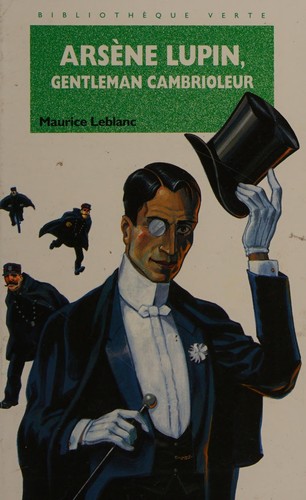
Henry s'arrêta de manger et, par-dessus le feu, compta de loin les bêtes.
Henry stopped eating and, across the fire, counted the animals from where he sat.
La Maheude s'arrêta de crier, pour le regarder stupidement, de ses grands yeux fixes.
La Maheude stopped screaming and stared at him dully with her large fixed eyes.Il venait de reconnaître Pierron, caché au dernier rang; et ses yeux s'étaient arrêtés sur Étienne, assis en face de lui.
He had just recognized Pierron, hiding in the back row, and his eyes had come to rest on Étienne, sitting opposite him.
In modern texts
Collocations
arrêter + adverb
- s'arrêter brusquementto stop abruptly
- s'arrêter un instantto stop for a moment
arrêter + preposition
- s'arrêter devantto stop in front of
- s'arrêter àto stop at
verb + arrêter
- faire arrêterto have someone arrested; to stop
- se faire arrêterto get arrested
Set expressions
- s'arrêter netto stop dead
- sans arrêtnon-stop
- arrêter de fumerto give up smoking
- s'arrêter en cheminto stop halfway
- ne pas s'arrêter en si bon cheminnot to stop when things are going so well
- arrêter les fraisto cut one's losses
- arrêter courtto cut short
Watch out
“Il arrête” is “he stops (someone)” or “he quits”; “il s'arrête” is “he stops” himself. Without “se” there must be an object: “arrête-le !” (stop him!).
“Arrête !” (stop!) sounds like “une arête” (a fish bone; a mountain ridge). The spelling differs: double r in the verb, one r in the noun.
Arrest comes from Old French arester, “to stop”. In French arrêter still means first of all “to stop”, and only then “to arrest”.
 Le Vicomte de Bragelonne444 times
 Guerre et Paix436 times
 Les Misérables284 times
 Jean-Christophe255 times